 JB
JB
Jonathan Bateman
— On the schedule —
Breaking Deepfakes with Shared Secrets
Voice clones fool employees into wiring millions. AI-generated video calls scam elderly parents. Traditional authentication like passwords, 2FA, and biometrics can all be faked or phished. How do we verify identity when audio, video, and biometrics are no longer trustworthy? This talk introduces The Doppelgänger Protocol: a cryptographic approach that transforms shared human memories into authentication keys. The core insight is simple but powerful: an AI impersonator can replicate your voice, your face, and your mannerisms, but it cannot answer a question only you (Alice) and the real person (Bob) could know. The protocol makes that instinct cryptographic, repeatable, and deployable at scale. We'll walk through the full technical architecture: how each party generates an ECDH keypair locally in the browser using the Web Crypto API, how Alice's memory answer is embedded as a 384-dimensional semantic vector (all-MiniLM-L6-v2), and how cosine similarity scoring gates the key exchange itself. Alice's public key is never released to an unverified Bob and sessions are ephemeral by design. What you'll learn: 1. Why deepfake attacks expose the gap between credential security and identity assurance 2. How memory-based challenges can create cryptographic proof of shared human experience 3. The technical architecture: local key generation, challenge protocols, and privacy preservation 4. How The Doppelgänger Protocol layers on top of–rather than replacing–existing authentication standards What you'll do: After a focused technical breakdown, you'll pair up with another attendee, create shared memory challenges, and experience the protocol firsthand seeing how two strangers can establish a cryptographically verified trusted connection in minutes through a mobile-first experience. Using a browser-based demo attendees will generate keypairs in-browser and watch a real encrypted channel open between two people who just met. The debug panel logs every cryptographic event in real time: keypair generation, embedding vector preview, cosine similarity score, shared secret derivation so technically curious attendees can follow the protocol at any depth they choose. Walk away with: A new mental model for human-layer authentication, Trust on First Use (TOFU), hands-on protocol experience, and a framework for thinking about where memory-based verification fits alongside MFA, passkeys, and existing identity infrastructure. You'll also leave with open-source code to examine, fork, and build upon.
— Compositor's note —
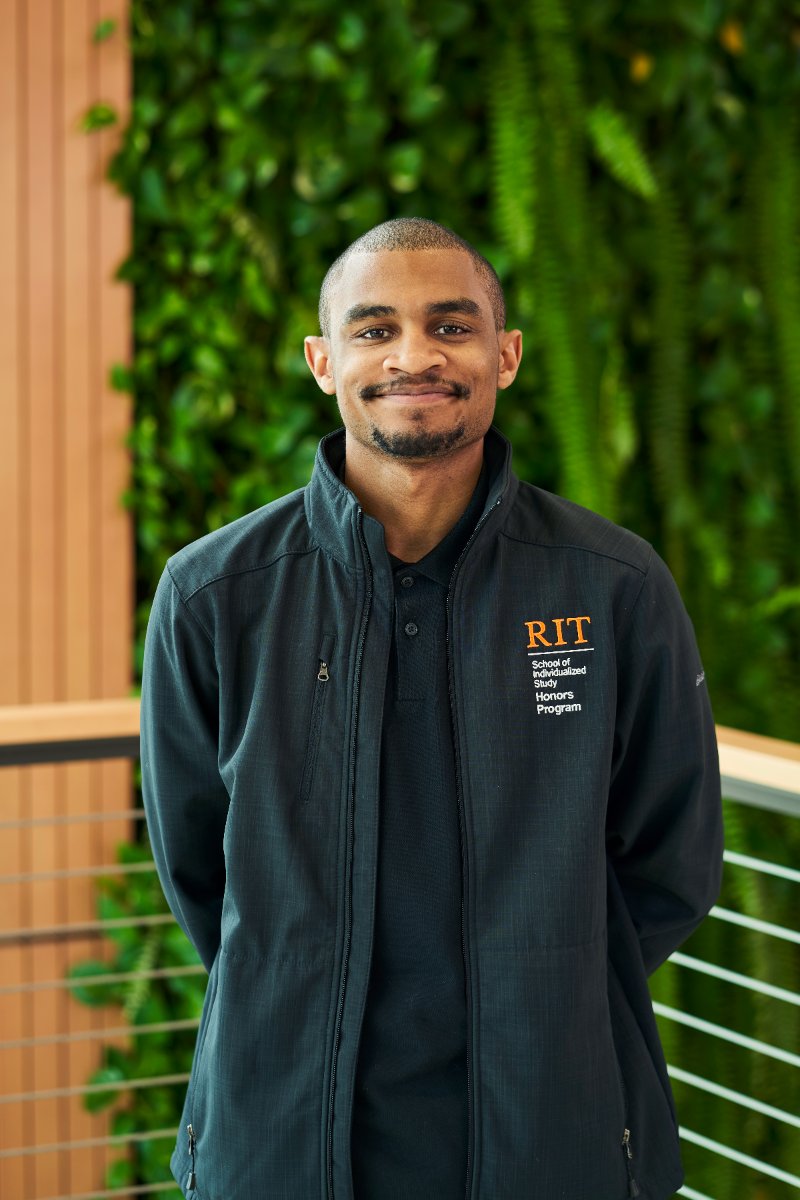
Jonathan Bateman is a secure‑software developer and applied mathematician who blends technical depth with social awareness to solve complex problems. As the founder of realxreal.ai, he helps people authenticate the online identities of their digital contacts by combining cryptography, biometrics, and shared memories to outsmart deepfakes. Previously, he co‑founded OpenBWC (Open Body-Worn Camera), an open-source initiative bringing algorithmic transparency to police body worn camera analysis using AI. He is currently a senior in RIT’s Honors Program, pursuing dual degrees in Applied Math & Computing Security and Sociology & Anthropology, and he holds fellowships and scholarships including Y Combinators AI Startup School, SOIS Gap‑Year Fellow, Partners & Napier Fellow, Spectrum Scholar, and RIT Multidisciplinary Scholar. Believing that the most powerful technology serves both society and security, he weaves together mathematics, anthropology, sociology, and ethics.